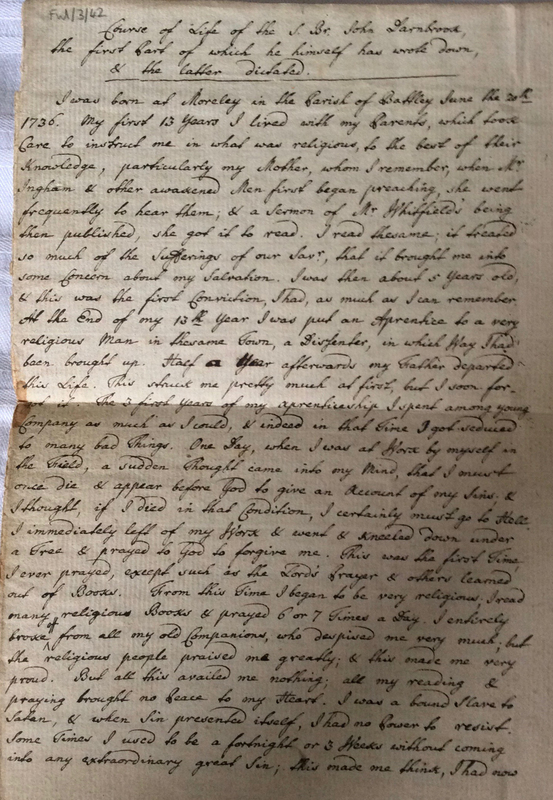
This autobiographical and memorial account recounts the life of John Darnbrook (1736–1770), who was raised in a religious Yorkshire family but struggled in his youth with sin, pride, and spiritual dissatisfaction despite intense efforts at prayer and moral reform. After hearing Moravian preaching about Christ’s suffering and salvation through his blood, he became deeply moved and gradually joined the Moravian Brethren. His life then took him through years of travel and seafaring, including dangerous voyages to Greenland, India, and China, where he witnessed extreme hardship, sickness, and moral corruption while repeatedly wrestling with guilt and fear of damnation. After a profound religious experience in London in which he felt assured of Christ’s mercy, he fully joined the Moravian congregation and eventually settled at Fulneck, where he lived quietly and faithfully among the Brethren. Though physically weak and often humble about his spiritual state, he was remembered as sincere, devoted, and deeply attached to Christ, spending his final illness in peaceful preparation for death before dying in 1770 at age 33.
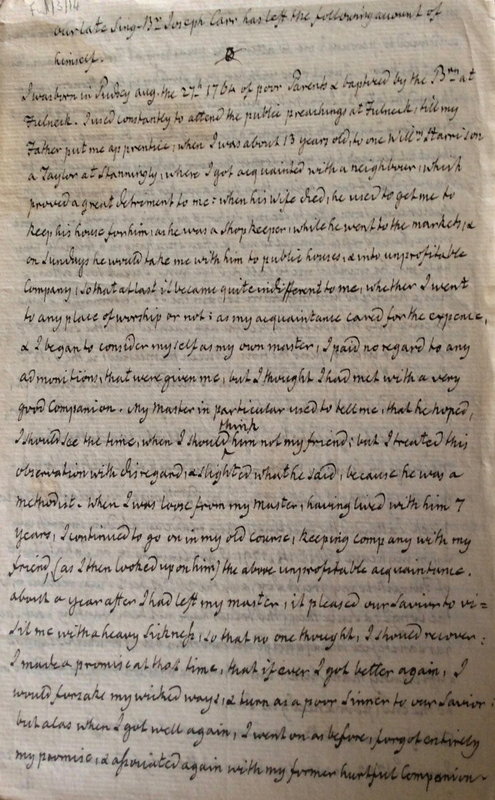
This autobiographical and memorial account recounts the life of Joseph Carr (1764–1796), a poor Yorkshire apprentice who drifted into careless living and bad company during his youth despite being raised around the Moravian community at Fulneck. After a serious illness and the encouragement of his sister and Moravian ministers, he became deeply affected by Moravian preaching and gradually joined the Brethren, eventually living in the Single Brethren’s house at Fulneck. He remained humble and viewed himself as an unworthy sinner saved only through Christ’s mercy, finding particular comfort in Holy Communion and Passion Week services. Though naturally quiet and often sickly, he was remembered as sincere, devout, and deeply attached to Christ, facing his final illness and death from consumption peacefully in 1796.
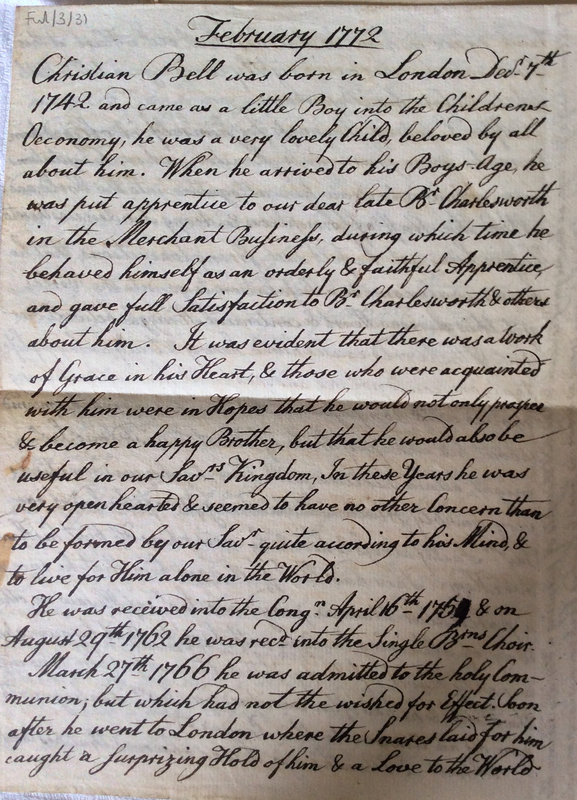
This biographical memorial account describes the life of Christian Bell (1742–1772), a Moravian brother raised in the Children’s Economy who was initially seen as sincere, faithful, and spiritually promising. After entering business and traveling to London, however, he became increasingly drawn toward worldly ambitions and struggled inwardly between devotion to Christ and attachment to worldly life. Though deeply troubled by this divided heart and fearful for his soul, he repeatedly experienced convictions of conscience and continued longing for spiritual peace. Eventually he developed consumption, which he viewed as part of God’s merciful effort to draw him back fully to Christ. During his final illness he openly confessed his regrets about neglecting the congregation and pursuing worldly interests, but shortly before death he found comfort, assurance of forgiveness, and peace in Christ, dying calmly in 1772 at age 29.
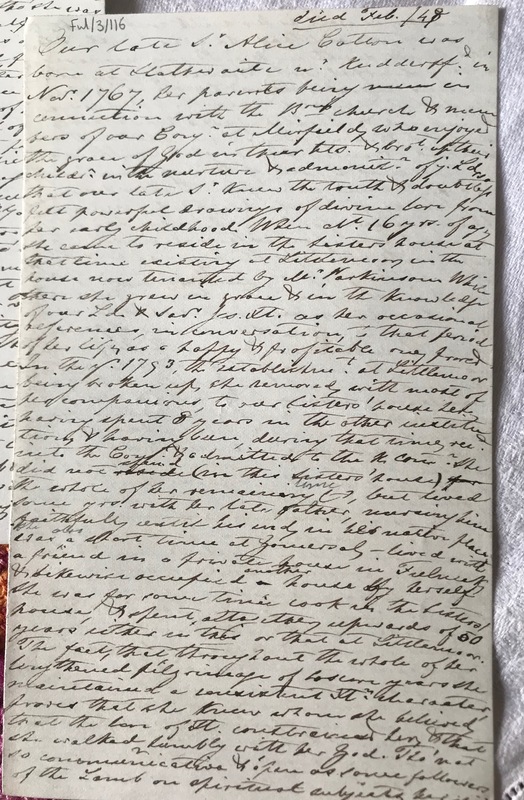
This biographical memorial account describes the life of Alice Catton (1767–1848), a Moravian sister raised in a devout religious household who spent most of her long life connected with the Moravian communities at Littlemoor and Fulneck. Known for her cheerful, gentle, and humble character, she faithfully served in various roles, including caring for her aging father and working in the Sisters’ House, while maintaining a steady and sincere religious life for more than fifty years. Though she experienced some hardships, including financial loss in old age, she accepted them calmly and trusted in God’s care. During her final illness she spoke peacefully and confidently of Christ’s grace and forgiveness, expressing no fear of death and affirming her complete trust in her Savior before dying quietly in 1848 at age 80.
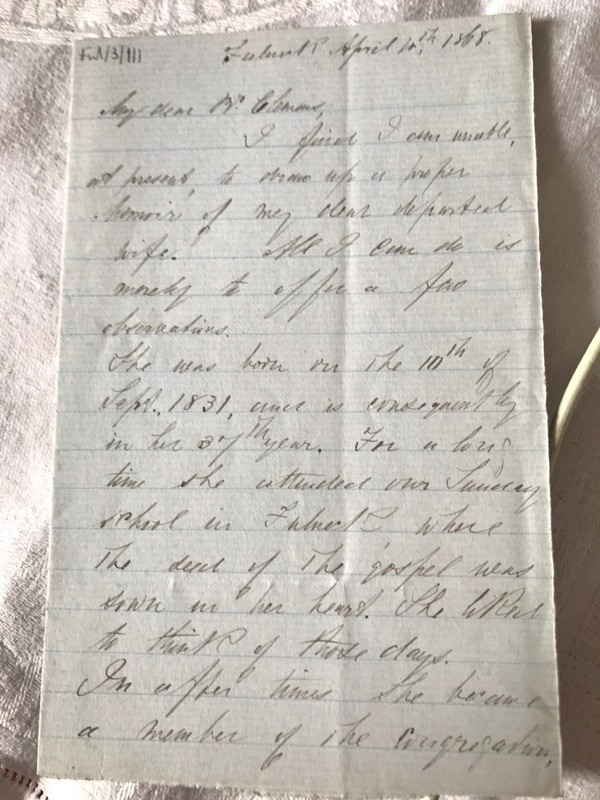
This biographical memorial letter describes the life and death of the wife of missionary James Ward, born in 1831 and raised within the Moravian community at Fulneck. After attending the Sunday school and later living in the Sisters’ House, she married and went with her husband to Jamaica in 1856, where they served in several Moravian congregations. She was remembered as quiet, devoted, and deeply caring, earning the affection of both the local people and fellow missionaries. Though often in fragile health and frequently suffering from tropical illness, she remained faithful in her work and loving toward her family, especially her children. Shortly before her death, she tenderly blessed her children and bade farewell to those around her, peacefully dying while a benediction was being spoken.
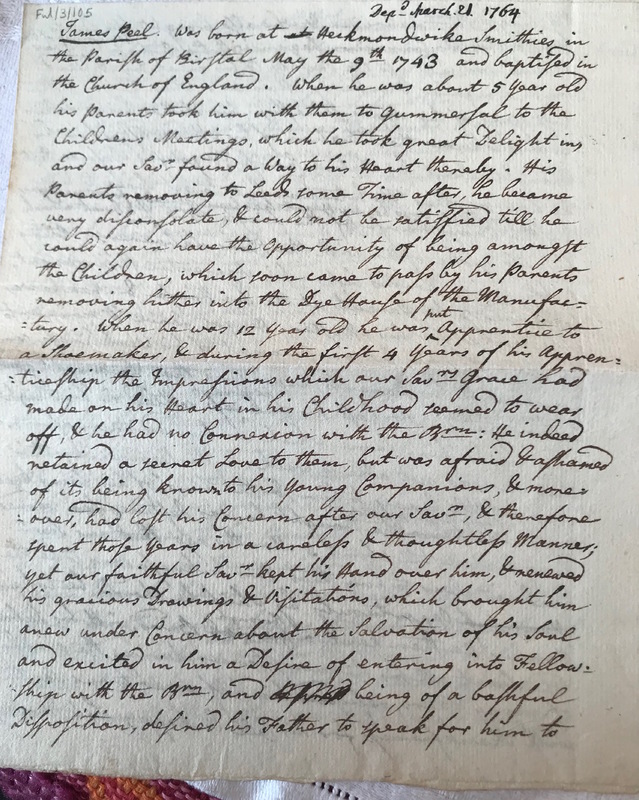
This biographical memorial account describes the short but deeply religious life of James Peel (1743–1764), who was raised within the Moravian community from childhood and developed an early love for the Brethren and their meetings. Although he drifted somewhat during his apprenticeship years, he later renewed his commitment to Christ and joined the Moravian Society, longing especially to live in the Single Brethren’s Choir House. Before he could fully begin that life, however, he became seriously ill with a painful disease affecting his leg, which gradually left him unable to walk. Over time he came to believe that his sickness was the means by which Christ intended to “take him home,” and after a profound spiritual experience that filled him with peace and joy, he endured his suffering with remarkable patience and cheerfulness. He died peacefully in 1764 at age 20 during the singing of hymns among the Single Brethren, fully convinced of Christ’s nearness and love.
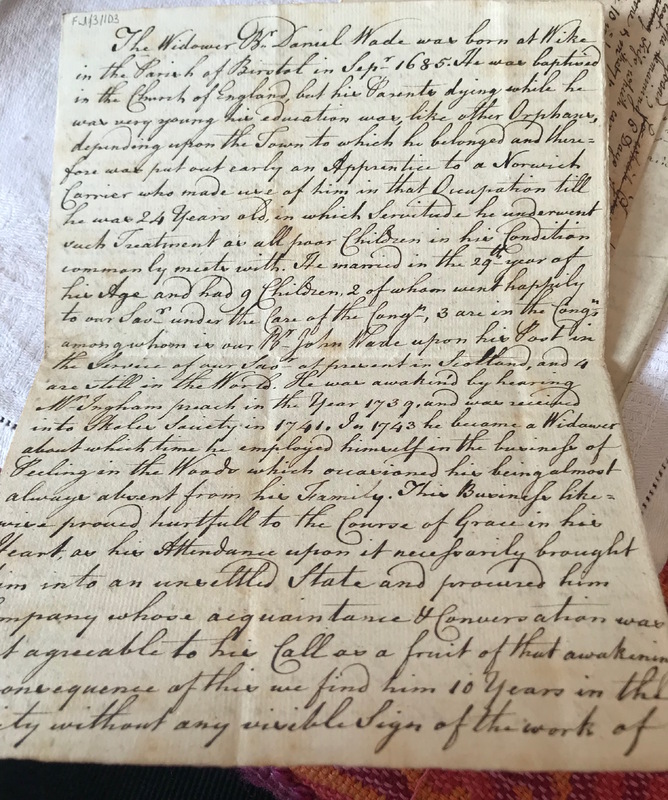
This biographical memorial account recounts the life of Daniel Wade (1685–1767), an orphaned Yorkshire laborer who endured a difficult childhood apprenticeship and later worked for many years peeling trees in the woods. After hearing the preacher Benjamin Ingham in 1739, he experienced a religious awakening and eventually joined the Moravian congregation, though his demanding work and worldly distractions slowed his spiritual growth for many years. Over time, especially in old age, he became deeply attached to Christ and the Moravian meetings, attending them faithfully despite extreme weakness and illness. He often reflected gratefully on what he believed were miraculous escapes from dangerous falls while working in trees, seeing them as signs of Christ’s protection. In his final illness he expressed joyful confidence that he would soon “see his Redeemer,” and he died peacefully in 1767 at age 81 after a life marked by increasing devotion, humility, and love for the Moravian community.
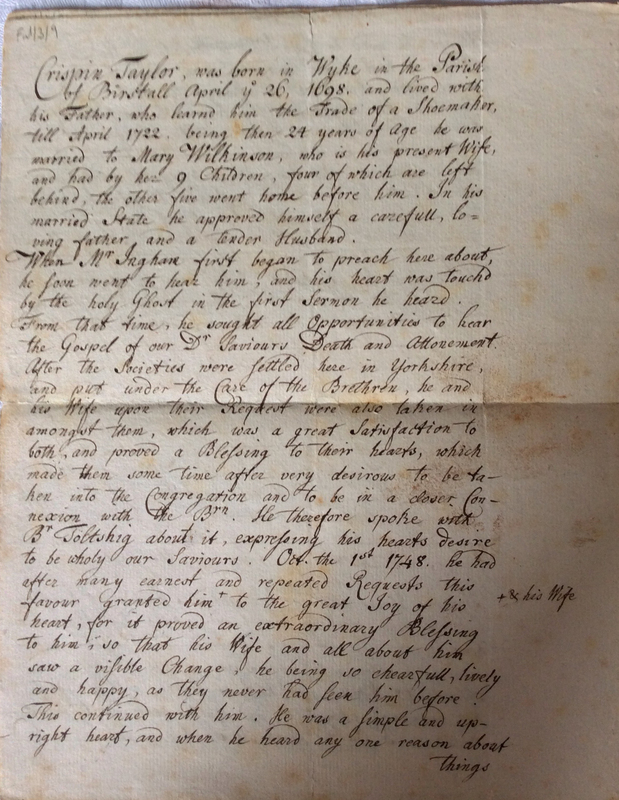
This biographical memorial account describes the life and death of Crispin Taylor (1698–1749), a Yorkshire shoemaker and devoted Moravian husband and father of nine children. Deeply affected by the preaching of Benjamin Ingham, he and his wife joined the Moravian Brethren, where he became known for his simple faith, humility, cheerfulness, and strong devotion to Christ. Holy Communion was especially meaningful to him, bringing him profound spiritual joy and comfort throughout his life. In his final illness, despite severe pain, he remained calm, patient, and eager to “go to my dear Saviour,” repeatedly encouraging his family to “cleave to the Saviour.” Shortly before his death he tenderly blessed his wife and children, then died peacefully and quietly, described as resting safely in the “everlasting arms and pierced heart of Jesus.”
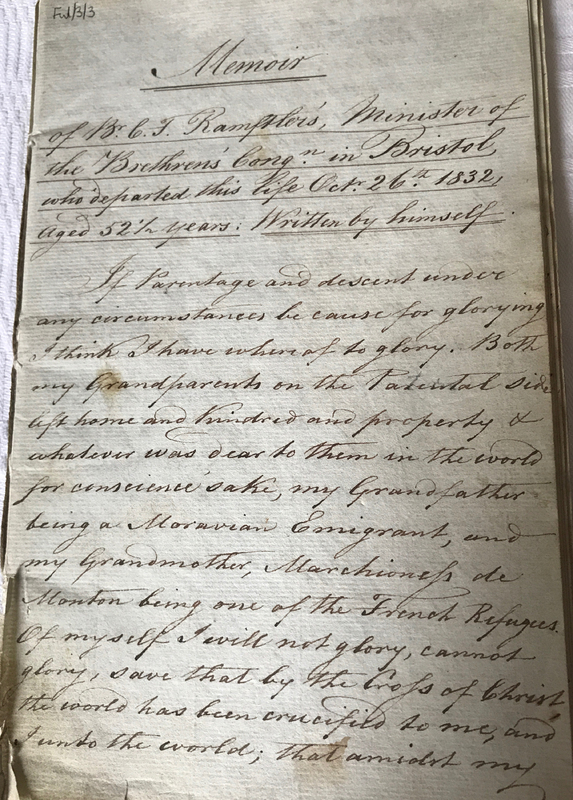
This autobiographical and memorial memoir recounts the life of C. F. Ramftler (1780–1832), a Moravian minister born in Saxony and raised within the Moravian Church. From childhood he felt drawn toward religious life and ministry, despite periods of doubt, illness, and personal struggle. After teaching and theological training in Germany, he was called to England in 1803, where he became a teacher, preacher, and eventually minister in several Moravian congregations including Bedford, Fulneck, and Bristol. The memoir emphasizes his energetic devotion to pastoral work, missionary causes, preaching, and education, as well as his struggles with a naturally harsh temper and the pressures of leadership. During his final illness he remained deeply devoted to Christ and continued preaching almost until death, expressing peace, humility, and a longing “to depart, and to be with Christ.” He died in 1832 at age 52 and was remembered as a gifted, tireless, and spiritually influential Moravian pastor.
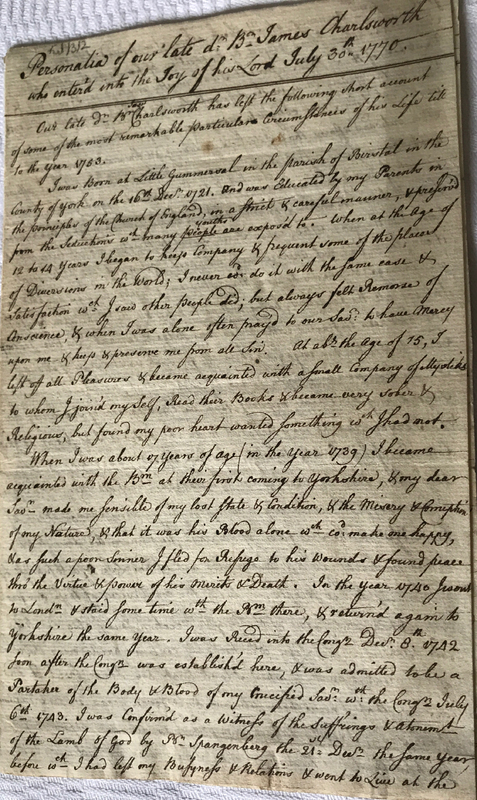
This autobiographical and memorial account recounts the life of James Charlesworth (1721–1770), a prominent Moravian leader in Yorkshire who was raised in the Church of England and drawn early toward serious religious life. After joining the Moravian Brethren in the 1740s, he became deeply devoted to Christ, preaching, pastoral care, and the administration of Moravian settlements and businesses at Fulneck and elsewhere. Though gifted in leadership and trusted with major financial and organizational responsibilities, he often struggled inwardly with stress, spiritual concern, and the burdens of external affairs, longing instead for more direct spiritual ministry. In his later years his preaching became especially heartfelt and spiritually powerful, while his health steadily declined. During his final illness he remained loving, peaceful, and eager to “go home” to Christ, dying calmly in 1770 surrounded by prayer, hymns, and the Moravian congregation.
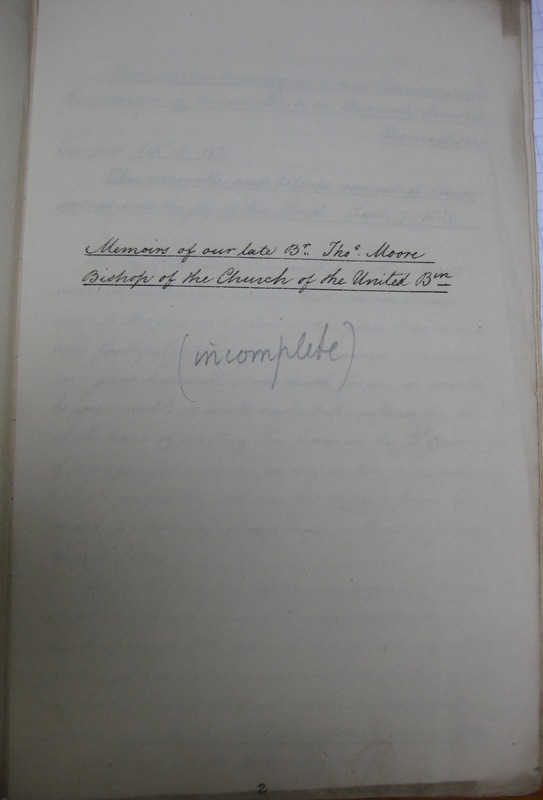
This autobiographical memoir by Thomas Moore (born 1750 in Worcester) recounts his early life, education, and gradual religious awakening. Raised in the Church of England by a respectable merchant family, he lost his father at a young age and was carefully educated by Anglican clergymen. Although he later recognized sinful tendencies and worldly influences among his school companions, he was deeply affected as a boy by evangelical religious meetings led by Rev. Mr. Mansell in Staffordshire. A sermon emphasizing that “One thing is needful” left a lasting impression on him, even before he fully understood its spiritual meaning. These early experiences laid the foundation for the stronger Christian faith and spiritual convictions that later shaped his life.
This memoir recounts the life of John Willey (1781–1847), a devoted member of the Moravian Church who was raised in Fulneck within a deeply religious family. Though he experienced a generally happy and innocent childhood and was remembered for his gentle disposition, he also struggled at times with worldly influences and youthful pleasures while apprenticed away from home. Over time, however, he became increasingly devoted to Christ and the Moravian faith, eventually being regarded as a sincere and faithful servant within the congregation. The memoir emphasizes his kindness, humility, and steady Christian character, as well as the affection felt for him by family, friends, and fellow believers. During his final illness he remained calm and trusting in Christ, and the account closes with his children expressing confidence that he had entered eternal peace and happiness with the Lord after his death in 1847 at age 66.
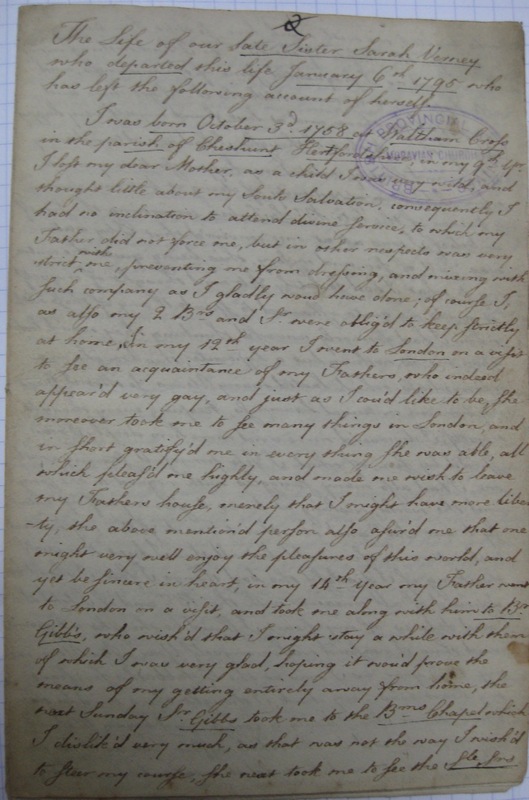
This autobiographical memoir tells the story of Sarah Venney (1758–1795), who spent her youth attracted to worldly pleasures before gradually becoming devoted to the Moravian faith. She struggled for years with feelings of sinfulness and spiritual doubt but eventually found peace and joy in Christ through the Brethren’s community. During her final illness from consumption, she remained patient and faithful, eagerly looking forward to being with her Savior, and died peacefully in 1795 at age 36.
This autobiographical spiritual memoir by Sam Tipsett (born 1711) describes his difficult youth, struggles with guilt and worldly pleasures, and repeated fears about death and salvation. After years of inner conflict and failed attempts to reform himself, he experienced a religious awakening among the Moravian Brethren and found peace and comfort in faith. The memoir focuses on repentance, spiritual struggle, and his deep dependence on Christ.
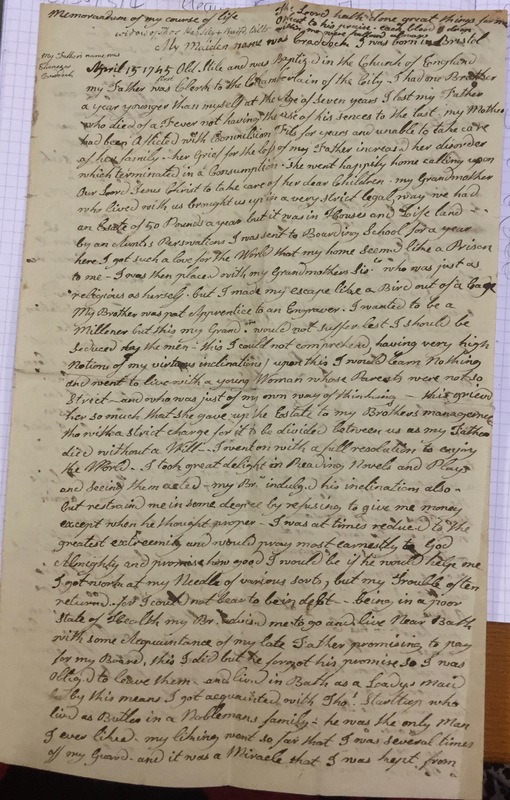
Mary Startton (born 1745 in Bristol) wrote an autobiographical account of her early worldly life, emotional struggles, and eventual religious conversion. After losing both parents young, she pursued pleasure and fashionable society but felt increasingly troubled about her salvation. Following a powerful spiritual awakening centered on Christ’s forgiveness, she joined the Moravian congregation in the 1780s and described finding lasting peace and spiritual purpose there.
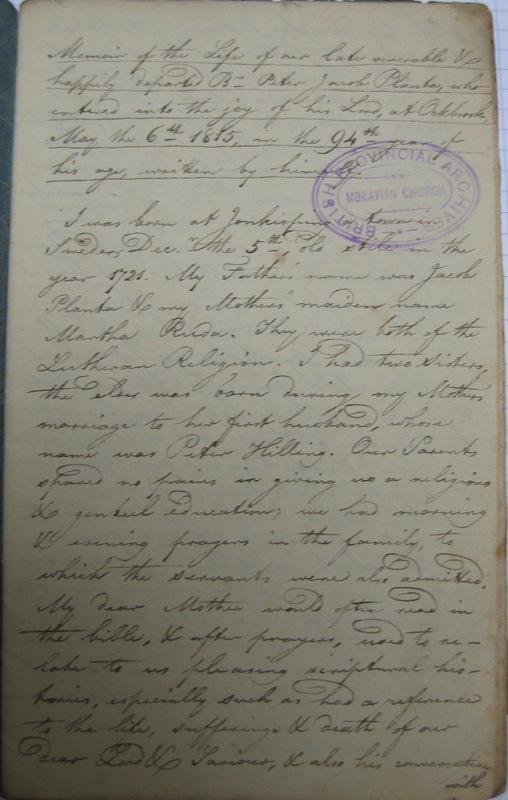
Peter Jacob Planta wrote an autobiographical Moravian memoir describing his life from his birth in Stockholm in 1721 through his spiritual journey into the Moravian Church. Raised in a Lutheran family, he experienced deep religious feelings from childhood, later struggled spiritually, and eventually found peace and community among the Brethren. He later served in Sweden and reflected on faith and old age before his death at Christiansfeld in 1815.
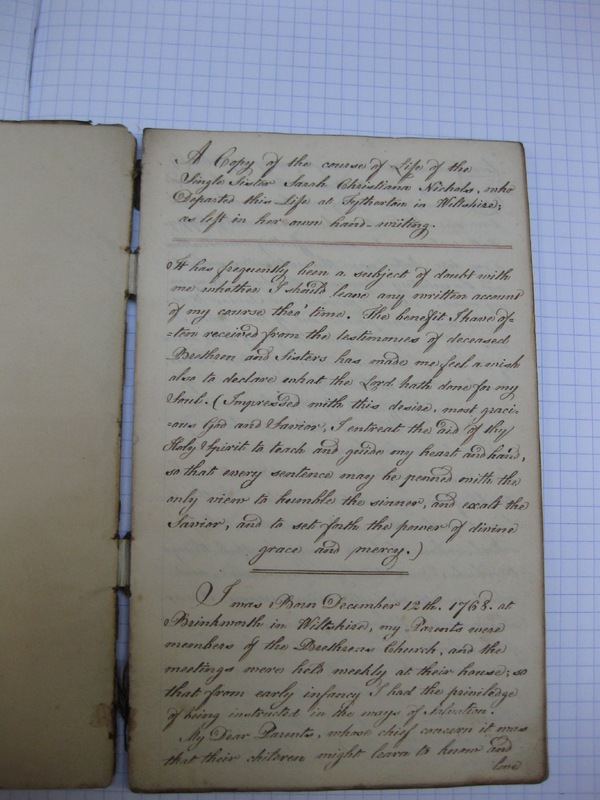
This is the spiritual autobiography of Sarah Christiana Nichols, a Moravian “single sister” from Wiltshire, England. She writes about being raised in a deeply religious Moravian household, her lifelong Christian faith, and her spiritual struggles, growth, and devotion to Christ. The ending describes her peaceful death in 1825 at age 56, emphasizing her faith, comfort in God, and readiness for heaven.
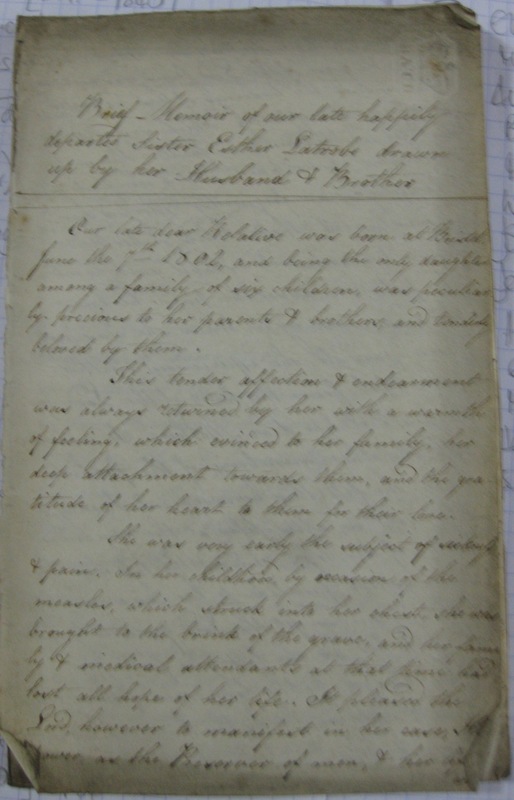
This memoir tells the life story of Esther Lattrobe Brown, a woman remembered for her deep Christian faith, loving nature, and patience through years of illness and suffering. Written by her husband and brother, it describes her close attachment to her family, her repeated health struggles beginning in childhood, and the calm endurance that impressed those around her. Much of the memoir focuses on her spiritual life, including prayers, reflections, and devotional writings in which she expresses trust in Jesus, gratitude for God’s mercy, and hope for eternal salvation. Despite physical pain and emotional trials, she is portrayed as increasingly devoted to religion and comforted by her faith.
The work ends by presenting her death as peaceful and triumphant, emphasizing her confidence in eternal life and offering her as a model of Christian patience, humility, and devotion.
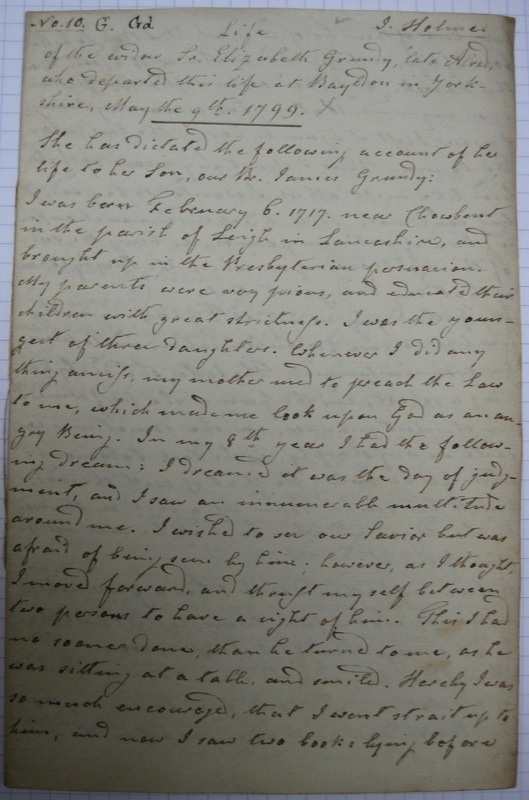
This is a spiritual autobiography and death account of Elizabeth Grundy, who died in Yorkshire on May 9, 1799. She was born in 1717 in Lanarkshire, Scotland, and raised Presbyterian by very strict religious parents. The memoir describes vivid religious dreams and fears from childhood, illness and hardship after her father’s death, struggles with doubt, sin, and religious doctrine, periods of spiritual awakening and renewed faith, and finally her calm, deeply devotional final illness and death.
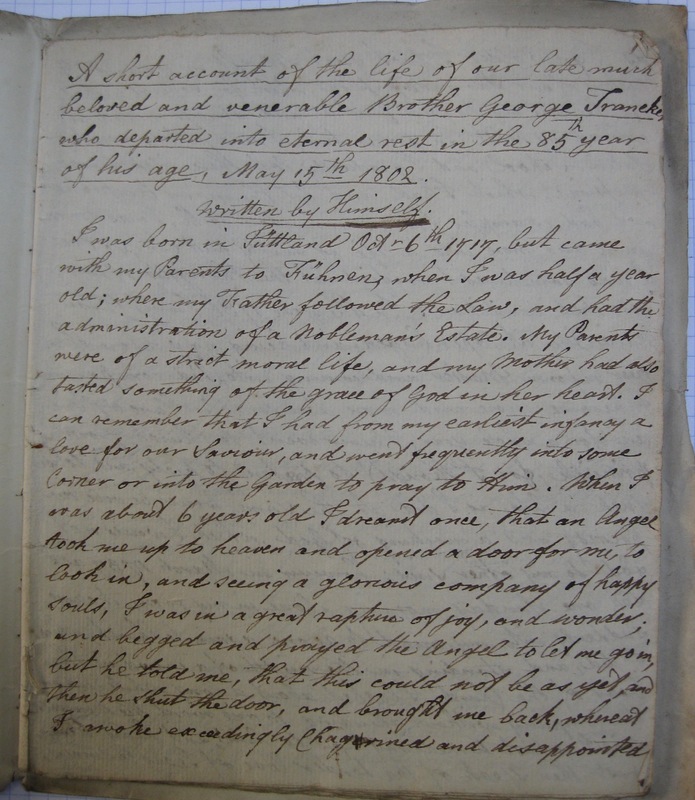
This memoir tells the life story of George Francke, a Moravian religious leader born in 1717 who died in 1802 at age 85. Written partly in his own words, it describes his deeply religious childhood, early spiritual visions, youthful struggles with temptation and “worldly” living, and eventual religious awakening. He studied in Copenhagen, drifted from faith for a time, then experienced a renewed devotion to Christ and dedicated decades to ministry within the Moravian Church.
The final pages describe his peaceful final illness and death, emphasizing his patience, faith, affection toward visitors, and longing for “eternal rest.” The memoir praises his long service to the church and presents him as a model of Christian devotion whose soul was joyfully reunited with Christ.
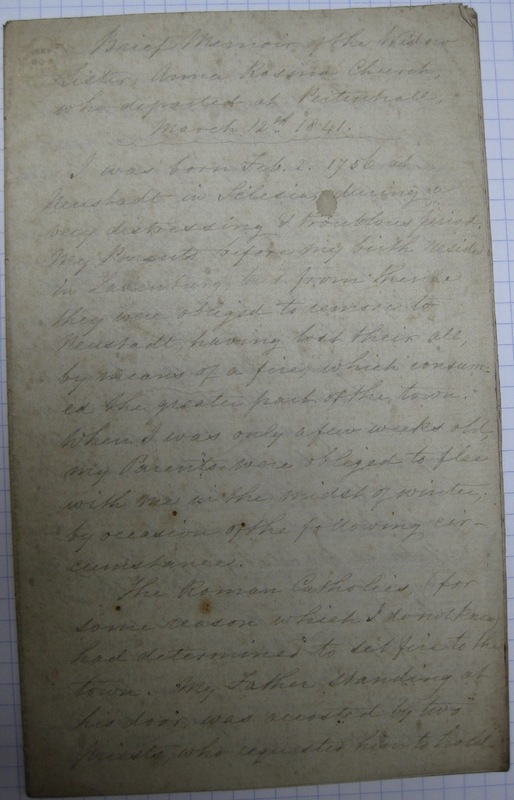
This memoir recounts the life of Anna Rosina Church, a Moravian woman born in 1786 in Silesia during a time of hardship and unrest. Shortly after her birth, her family lost their possessions in a devastating fire and were forced to flee in winter conditions. The memoir follows her life as one marked by humility, faith, suffering, and devotion to religion. It emphasizes her Christian character, patience, and spiritual growth, presenting her as an example of faithful living within the Moravian community. Near the end, the writer reflects lovingly on her death in 1841, expressing confidence that she entered eternal rest and was welcomed by Christ as a “good and faithful servant.”
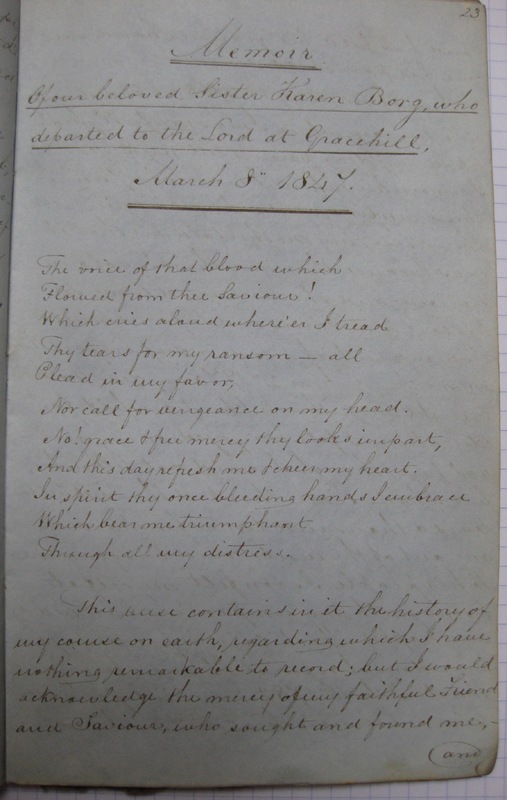
Karen Borg describes being born in Norway in 1768 and raised in a religious household. As a child she was deeply moved by teachings about Jesus and later joined the Moravian community at Christiansfeld for education. The memoir follows her spiritual journey, emphasizing humility, devotion, prayer, obedience, and service within the church. It also recounts important transitions in her life, including moving to other Moravian settlements and dedicating herself to religious work and communal life.
The closing pages praise her kindness, simplicity, faithfulness, and love for church worship. During her final illness she expressed sorrow at being unable to attend meetings and repeated devotional hymns and prayers. The memoir ends by saying she has now entered the “great congregation” in heaven and encourages others to follow her faithful example.
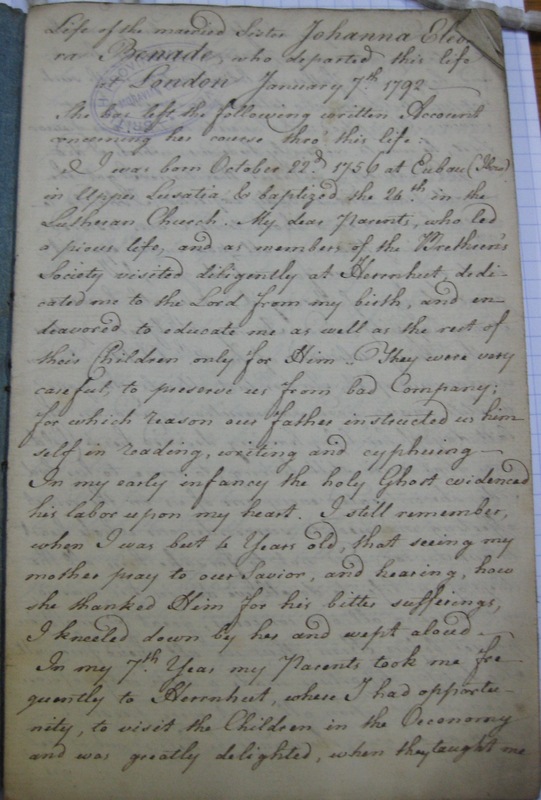
This manuscript is a memoir of Johanna Eleonora Brandt, who died in Rundell on January 7, 1792. It is largely autobiographical because much of the narrative is written in the first person, though later portions appear to have been continued or edited by others after her death.
Johanna describes being born in 1756 in Upper Lusatia to devout Moravian parents who carefully raised their children in the faith and protected them from worldly influences. From early childhood she experienced strong religious feelings, prayer, and emotional devotion to Christ. She later spent time in Moravian educational communities such as Herrnhut and was deeply shaped by communal worship and discipline. The memoir follows her spiritual growth, marriage, hardships, illnesses, and continued commitment to religious life. Later pages describe periods of suffering, physical decline, and labor beyond her strength, but emphasize her patience, humility, and trust in the Savior.
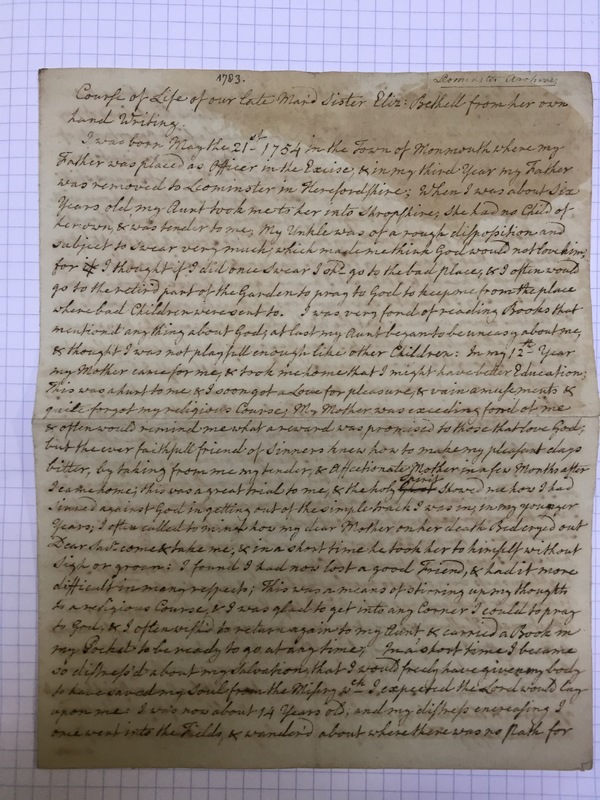
This Moravian memoir recounts the life and spiritual journey of Sister Elizabeth Bethell of Leominster, born in 1754. Written partly in her own words and later completed by others after her death, it describes her religious upbringing, struggles with doubt and despair, vivid spiritual experiences, marriage, and eventual renewal of faith through the Moravian Church. The final pages focus on her long illness, deep devotion to Christ, concern for her children, and peaceful death, portraying her as a model of humility and faith.