-
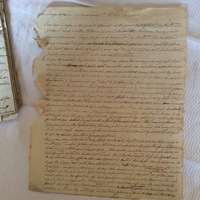 Mary Faucet (1748-1768)
 Handwritten biographical account of the life of Mary Faucet describing her childhood, early religious instruction, admission to the Moravian Single Sisters' Choir, spiritual development, and participation in the Moravian congregation. The narrative emphasizes her religious convictions, experiences of spiritual struggle and assurance, devotion to Christ, and faithful life within the Moravian community.
-
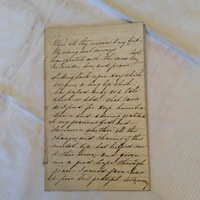 Ann Georgiana Edwards (1783-1852)
 Handwritten autobiographical spiritual memoir recounting the author's childhood and family background, early religious instruction, moves within England and Wales, and gradual spiritual development. The narrative describes experiences of conversion, association with Moravian ministers and congregations, participation in chapel meetings, and growing assurance of faith, emphasizing the author's religious reflections and personal testimony.
-
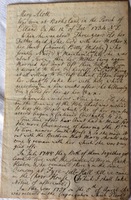 Mary Allot (1734-1754)
 Handwritten biographical account of Mary Allot (born December 12, 1734), recounting her childhood, entrance into the Moravian community, life among the Single Sisters, spiritual growth, prolonged illness, and death on Christmas Day. The narrative emphasizes her religious devotion, perseverance in suffering, and Christian faith in the Moravian tradition.
-
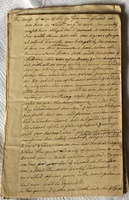 Anna Gambold (1752-1769)
 Handwritten biographical account of the life of Anna Gambold, born in London on August 15, 1752. Describes her childhood, early religious education, admission to the Moravian Girls' Choir, spiritual growth, devotion to prayer and scripture, and participation in the Moravian community. The narrative emphasizes her piety, humility, love for the Savior, patience during illness, and peaceful death, portraying her as an example of Christian faith within the Moravian tradition.
-
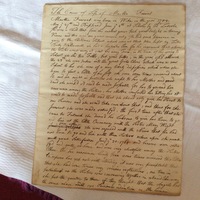 Martha Faucet (Fawset) (1751-1766)
 Handwritten biographical account of Martha Fawset, born in 1747, tracing her childhood, education, admission to the Moravian Single Sisters' Choir at Fulneck, spiritual development, and final illness. The narrative emphasizes her religious life, participation in the Moravian community, expressions of faith, and peaceful preparation for death, reflecting the tradition of Moravian spiritual memoirs (Lebensläufe).
-
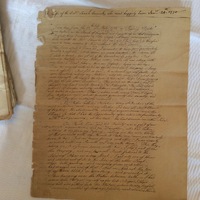 Sarah Cennick (1712-1770)
 Memoir of Sarah Cennick, born on June 12, 1712, in Reading, UK. After spending her youth navigating the social tensions of London, she became a pivotal Moravian leader, serving as a Deaconess and traveling extensively to oversee congregations in Germany, Ireland, and England. Her long career as a Choir Helper and administrator was defined by a sophisticated mystical piety that remained steadfast even as she succumbed to a protracted respiratory illness. She passed away at Fulneck, England, on January 24, 1770, at the age of fifty-seven, having spent her final days in a state of serene spiritual anticipation.
-
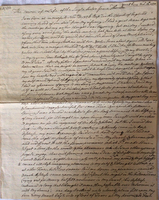 Grace Thornton (1736-1770)
 Grace Thornton's manuscript is a first-person account of her life and religious experiences from her birth in Mansfield, Connecticut, in 1736 through her spiritual development as a young woman. She describes her upbringing, early impressions of religion, periods of conviction and emotional struggle, concern for the state of her soul, and her search for assurance of salvation. The narrative emphasizes prayer, self-reflection, and dependence on God, culminating in expressions of faith, peace, and preparation for death. Rather than focusing on external events, the memoir centers on her inner spiritual journey and relationship with God.
-
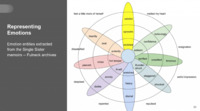 Carly Masonheimer’s Emotion Flower extracted from the Single Sisters’ Memoirs.
-
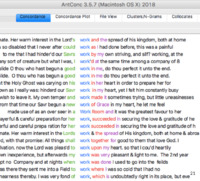 Analyzing “work” as a KWIC in the women’s memoirs.
-
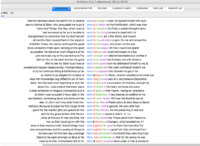 Analysing “work” as a keyword in context (KWIC) in the men’s memoirs from Fulneck
-
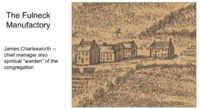 The Fulneck Manufactory
-
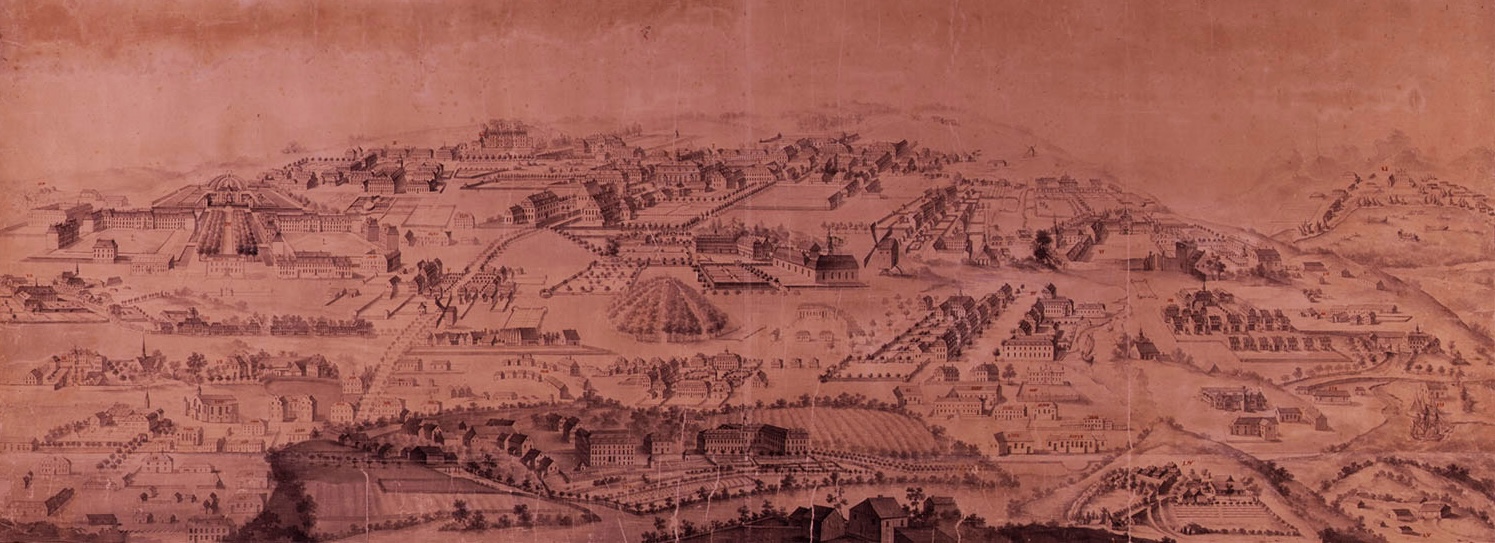
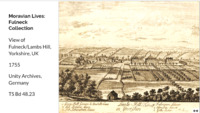 View of Fulneck/Lambs Hill, Yorkshire, UK
 Historical view of Fulneck (Lamb's Hill), Yorkshire, England, 1755.
-
 Anne Watson (1821-1837)
 This poignant 19th-century memoir recounts the final months of Anne Watson, a sixteen-year-old mill worker who died in May 1837 after a prolonged illness. Despite coming from an impoverished and spiritually neglected family, Anne had been transformed through her Sunday school education and personal devotion to Scripture. The account, written by a village minister who visited her during her final days, reveals a young woman of remarkable faith and spiritual maturity who found solace in the Bible—her constant companion—even as consumption ravaged her body. In her dying weeks, Anne demonstrated extraordinary peace, submission to God's will, and fervent concern for the souls of her companions, repeatedly urging them to turn to Jesus, "the Good Shepherd." Her death became a testimony to the power of faith among the poor and marginalized, with her final request that a funeral sermon be preached on Ecclesiastes 12:1—"Remember now thy Creator in the days of thy youth"—drawing a vast crowd of young people and serving as a final evangelistic appeal from beyond the grave.
-
 John Thompson Beck (1815-1837)
 This memoir recounts the spiritual transformation and death of John Thompson Beck, a 22-year-old man who underwent a profound conversion from worldly materialism to Christian faith during his final illness. Initially characterized by an unusual hardness of heart for someone so young, Beck was consumed by an obsessive desire to acquire wealth, and even as his fatal illness progressed, he clung desperately to life and his earthly ambitions, causing great distress to those who visited him. However, after months of pastoral care, scripture reading, and prayer, the grace of God finally broke through his resistance following a conversation about Christ's sacrificial love, leading Beck to spend three hours in prayer seeking faith and pardon. From that pivotal moment, he experienced a complete spiritual transformation, surrendering himself to God's will, losing his fear of death, and bearing his excruciating physical suffering with remarkable patience and peace. In his final weeks, he became a humble believer who fixed his hope on Christ's atonement, impressed the importance of eternal matters on all his visitors, was received as a church member on August 13th, received communion with his family, and ultimately died peacefully, his soul sustained by "inward consolations" and his countenance beaming with the peace and joy of salvation despite his bodily torment.
-
 Daniel Kliest (1716-1792)
 This document recounts the life of Daniel Kliest, who was born on January 15, 1716, near Frankfurt an der Oder. It describes his childhood, religious upbringing, work and travels, his spiritual development, and his eventual connection with the Moravian (Herrnhut) Church. The narrative emphasizes his sincere Christian faith, periods of personal struggle and religious awakening, his relationships with fellow believers, and his efforts to live a devout life. It records various places where he lived and worked, significant events in his religious journey, details about his family and marriage, and finally his later years and death. Like many Moravian life sketches, the focus is less on worldly accomplishments and more on his character, faith, conversion experiences, and relationship with God.
-
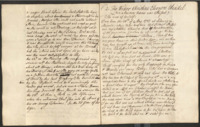 Christine Eleonore Seidel (1707-1763)
 Christine Eleonore Seidel (1707–1782), née Peüffel, was born on May 20, 1707, in Silesia to a deeply religious family whose mother's devotion left a lasting impression on her. After years of spiritual searching, dissatisfaction with worldly life, and struggles to find peace, she became drawn to the Moravian movement and eventually joined the congregation at Berthelsdorf and Herrnhut, where she experienced a profound religious awakening and assurance of faith. She served the Moravian Church in various capacities for more than three decades, including leadership roles among the Single Sisters, and was remembered for her humility, devotion, compassion, and steadfast commitment to Christ. In her final years she expressed an increasing longing to be with her Savior, and after a brief but painful illness she died peacefully in March 1782, surrounded by fellow believers who viewed her death as a joyful homegoing.
-
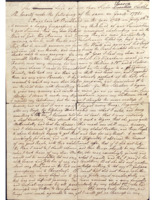 Eleonora Seidel (1724-1772)
 Eleonora Seidel (born 1724) was raised in a religious Lutheran household and developed a deep concern for her salvation from an early age. After a period of spiritual struggle, she joined the Moravian Church, where she found peace and assurance through faith in Christ. She was received into the congregation in 1748 and devoted her life to service in several Moravian communities, including Herrnhaag, England, Bedford, and Fulneck, primarily working with girls and single sisters. Known for her compassion, humility, diligence, and concern for the spiritual welfare of others, she faithfully served her choir for many years despite declining health. Following a prolonged illness, she died peacefully in June 1782, and the memoir commemorates her as a devoted Moravian sister whose kindness, benevolence, and Christian example left a lasting impression on those who knew her.
-
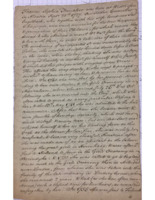 Frances Sophia Tranaker (1727-1784)
 Frances Sophia Tanaker (1727–1782) was a devoted member of the Moravian Church who experienced a religious awakening in childhood and entered the Moravian Girls' Economy at Mariendorf in 1740. She later served in Moravian educational and leadership roles in Germany, the Netherlands, and England before marrying George Franeker in 1759 and being ordained a deaconess. Together they helped oversee Moravian congregations and children's institutions in Bedford, Bristol, London, and Fulneck. Remembered for her faithfulness, compassion, and dedication to the care of women and children, she endured a lengthy illness before dying peacefully on March 29, 1782. This biographical memoir (Lebenslauf), written after her death by another person and based on her life and service, commemorates her spiritual journey and contributions to the Moravian Church.
-
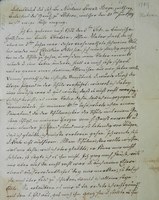 Nicholaus Lorenz Bage (1732-1789)
 This memoir chronicles the life of Nicolaus Lorenz Bage (1732-1789), a devoted member of the Moravian Brethren community who served as a religious worker across multiple settlements in Europe and America. Born in Danish Holstein, Bage experienced a profound spiritual awakening at age ten that set him on a lifelong path of faith, leading his family to join the Moravian community in Herrnhut, Saxony in 1744. His autobiography traces his journey from childhood through his ordination as a deacon in 1764, detailing his missionary work with the boys' choirs and congregations in various Moravian settlements including Christiansbrunn (Christina Springs) and Lititz in Pennsylvania, Bethabara and Salem in North Carolina, and finally Hebron (Lebanon) in Pennsylvania, where he served until his death from dropsy (edema) in 1789. Throughout his life, marked by three marriages (the first two wives predeceased him) and the loss of several children, Bage maintained an unwavering childlike devotion to Christ, whom he consistently referred to as "der liebe Heiland" (the dear Savior), and he was remembered by his community as a humble, patient, and loving servant who found joy in preaching the Gospel to both congregation members and strangers alike.
-
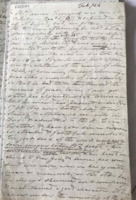 James Cromark (1767-1844)
 Biographical memoir of Brother James Cromark, an active member of the Moravian congregation in Pudsey, England. Raised from infancy in the Moravian chapel after his father joined the Brethren, Cromark was apprenticed to a local clothier named Mirfield around age 12 or 13. The text records his marriage, his joint entry into the Moravian Society and Holy Communion alongside his wife in 1798, and their deep spiritual awakening under the ministry of Brother John Hartley. It describes his quiet, retiring character and his multi-month decline involving jaundice and dropsical leg swelling. The record concludes with his final pastoral counseling and peaceful death at age 77, noting his extensive lineage of ten children and twenty-five grandchildren.
-
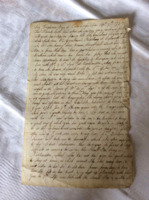 Ann Eagles (1734-
 Biographical memoir of Single Sister Ann Eagles. Orphaned in early childhood, she suffered severe operational hardships in domestic service throughout Oxfordshire until an open-air sermon by Brother Gussenbauer at Culworth prompted her spiritual awakening at age sixteen. The text chronicles her move to Northampton to serve Brother and Sister Ager, her introduction to the Moravian community, and her formal reception into the Bedford congregation in 1756. It details her intense longing to reside within the definitive Single Sisters' Choir House, her isolation in Northampton during a regional smallpox epidemic, and her rapid death from the disease under the bedside care and vocal hymnody of Sister Lorel in June.
-
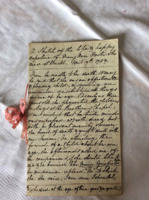 Mary Ann Foster (1784-1789)
 Biographical narrative and spiritual sketch of Mary Ann Foster, a child who frequented the Moravian Children's Meetings in Bristol and died at four and a half years old. The text captures a highly detailed example of Moravian childhood piety and the early internalizing of liturgy surrounding salvation, Christ's wounds, and a serene view of mortality. It documents her reactions to the funeral of her contemporary Maria Grinfield, her spiritual warning to a family servant, her premonition of her own death over an intended move to a school in London, and her explicit deathbed requests regarding a white Moravian choir-style burial processional. The account concludes with her death from a putrid sore throat and fever in April 1789.
-
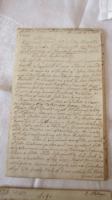 Henrietta von Hayn (1724-1782)
 Autobiographical and communal memoir of Henriette Mary Louise von Hayn (familiarly known as Louisel), a prominent Moravian deaconess, educator, and celebrated hymnwriter. Born into a noble family in Nassau, she describes her vivid childhood spiritual experiences, her dramatic escape to Marienborn and Herrnhag in 1744 against her parents' initial wishes, and her protective spiritual adoption by Count von Zinzendorf. The text highlights her 16-year administration over the regional Moravian Girls' Institutional Oeconomy (including its stay at Castle Hennersdorf) and her subsequent 16-year tenure as the head Choir Helper for the Single Sisters at Herrnhut. The closing narrative details her synodal participation, her creative hymnody, her long-term battle with a chronic lung cough, and her death from dropsical complications in August 1782.
-
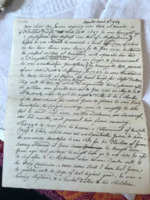 James Wyring (1687-1764)
 Biographical memoir of Brother James Wyring, an agricultural laborer (husbandman) originally raised in the Presbyterian Church. The text notes a lifelong physical lameness caused by an early injury from a cow. It details his marriage in Bradford in 1711, his subsequent spiritual awakening in Yorkshire upon hearing Moravian preaching, and his formal reception into the Moravian Society at Holme in 1743. The account highlights his immense dedication to traveling to congregational meetings at Fulneck despite his physical infirmity and advanced age. The record concludes with a description of his final illness (ague) and death under the spiritual care of Brother Hauptmann in March 1764.
-
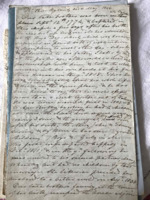 Peter Hyland (1774-1846)
 Biographical memoir of Peter Hyland, a baker who spent his entire life, education, and career within the Moravian settlement of Fulneck, England. The text, authored by a lifelong neighbor and acquaintance, outlines Hyland's education at the local Boys' Day School, his professional transition into his father's bakery business, and his marriages to Ann Birkby and Mary Wheatley. The account highlights his extensive structural contributions to the Fulneck community, which included serving on the congregation's committee and council, alongside a remarkable 52-year tenure as a voluntary chapel servant. It concludes with observations on his personal character, his spiritual principles, and his peaceful death from natural decline in May 1846.