-
 John Hugh (1743-1772)
 John Hugh, born in Pembrokeshire in 1741, was introduced to Moravian preaching and children’s meetings at a young age, where he first developed a love for the Savior through hymns, prayer, and simple religious fellowship. Although as a teenager he drifted toward worldly influences while working in difficult service positions, he later returned to a more serious spiritual life after reconnecting with Moravian believers and attending meetings in Haverfordwest. He eventually joined the Moravian congregation in 1765 and described experiencing deep joy, peace, and assurance through prayer, worship, and Holy Communion, often feeling spiritually comforted during solitary walks and devotions. After moving to Fulneck, he was respected for his sincere faith and devotion to the congregation, but a severe illness eventually overtook him. Facing death calmly and gratefully, he expressed confidence in Christ’s saving grace and died peacefully in 1772 at the age of thirty-one.
-
 Sarah Craven (1717-1790)
 Sarah Craven, born near Leeds in 1717, struggled in her early life between worldly desires and concern for her salvation until the preaching of Mr. Ingham and the influence of Moravian believers awakened a deep spiritual conviction within her. After years of inner conflict, self-doubt, and searching for assurance, she eventually experienced what she believed was Christ’s forgiveness and devoted herself fully to the Moravian congregation, later joining the Moravian Single Sisters’ community at Gomersal and the Choir House at Fulneck. Known for her gratitude, faithfulness, and willingness to serve others, she endured many years of illness with increasing longing to be united with her Savior. Shortly before her death in 1788, she spoke peacefully of Christ coming to “fetch” her, and she died calmly in the seventy-second year of her age.
-
 Hannah Wilkinson (1755-1810)
 Hannah Wilkinson, born near Halifax in 1755, was drawn from childhood to the Moravian Brethren through the influence of her deeply religious mother and early exposure to evangelical preaching. After joining the Sisters’ House at Fulneck as a young girl, she experienced a profound spiritual struggle that eventually led her to a renewed sense of forgiveness and devotion to Christ. She later became a member of the Single Sisters’ Choir and congregation, forming close spiritual friendships and dedicating herself to encouraging others in their faith. For nearly twenty years she served faithfully in the Sisters’ House at Wyke, where she was loved for her cheerful temperament, care for the sick, and guidance of younger Sisters. Despite years of illness and suffering from rheumatism and severe headaches, she remained patient and deeply trusting in her Savior until her peaceful death in 1809 at the age of fifty-five.
-
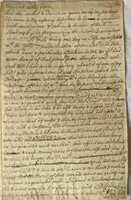 Hannah Ashley (1740-1761)
 Hannah Ashley, born in Yorkshire in 1740, developed a deep spiritual longing from childhood after hearing Moravian teachings about Christ’s wounds and sacrifice, eventually dedicating herself fully to the Moravian congregation and Single Sisters’ Choir. Throughout her youth she struggled with feelings of sinfulness, spiritual uncertainty, and self-examination, but gradually found comfort, forgiveness, and a strong sense of fellowship through the guidance of Moravian teachers and participation in Holy Communion. After joining the communities at Gomersal and later the Choir House, she experienced periods of happiness, devotion, and what she described as a close relationship with her “Bridegroom,” Christ. A long and painful illness eventually confined her to the sickroom, yet she faced death with patience, resignation, and joyful anticipation of union with her Savior. She died peacefully in 1761 at only twenty years old, remembered as a sincere, childlike, and deeply devoted member of the Moravian community.
-
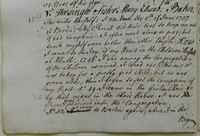 Mary Elisabeth Baker (1737-1767)
 Mary Elisabeth Baker, born in Berlin in 1737, was raised carefully by her parents and from childhood developed a deep attachment to the Moravian community and to Christ. After spending part of her youth in the Moravian children’s institutions at Herrnhut, she later struggled with awareness of her own sinful nature and longed to live more fully within the congregation. Through prayer and perseverance, she eventually gained permission to rejoin the Moravian community at Neusalz and later emigrated with the congregation, finding increasing spiritual comfort and closeness to her Savior. Known for her thoughtful and serious character, she desired above all to become more “Jesuslike” and devoted herself to communion and fellowship within the Single Sisters’ Choir. After developing a consumptive fever, she calmly anticipated death as a joyful reunion with Christ and died peacefully in 1763 at the age of twenty-six.
-
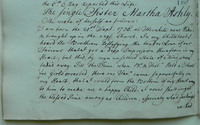 Martha Ashly (1736-1763)
 Martha Ashly, born near Wakefield in 1736, was deeply influenced as a child by Moravian preaching and religious schooling, where she first developed a heartfelt longing to know Christ and become spiritually “happy.” As she grew older, she experienced increasing awareness of her own sinful nature and devoted herself more fully to the Moravian congregation, eventually joining the Single Sisters’ Choir and later the Choir House, where she sought to dedicate her entire life to her Savior. Although naturally sickly and often troubled inwardly, she believed the Holy Spirit gradually taught her humility and dependence on Christ’s grace, bringing her renewed comfort and spiritual peace. During a long illness she remained patient and longed to be united with her “Bridegroom,” Christ, and she died peacefully in 1763 at the age of twenty-six believing herself lovingly received by her Savior.
-
 A. Mary Anton (1739-1763)
 Mary Anton, born in Holstein in 1739, spent much of her childhood moving among Moravian communities in Germany and struggled from an early age with lightmindedness, spiritual instability, and periods of sinful behavior that even led to temporary exclusion from the congregation. Despite these struggles, she repeatedly returned to Christ in repentance, experiencing deep emotional moments of forgiveness, spiritual renewal, and closeness to her Savior through prayer, confession, fellowship, and Holy Communion. Over time she became more sincere, humble, and devoted within the Single Sisters’ Choir, finding joy in serving others and seeking to live entirely as Christ’s “property.” After suddenly falling ill with a severe fever in 1763, she remained patient, cheerful, and spiritually focused, longing to depart peacefully into her Savior’s presence. Shortly after receiving Holy Communion one final time, she died quietly at nearly twenty-four years old.
-
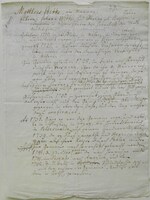 Mattheus Wittke (1749-1803)
 This manuscript is the life account of Matthes Wittke (or Wittke/Wittke), a Moravian man born in Moravia around 1700 who experienced religious persecution during the Counter-Reformation and later became connected with the Moravian renewal movement under Count Zinzendorf. The account traces his migrations through Moravia, Herrnhut, and eventually to America, including work as a weaver, marriage and children, participation in Moravian congregational life, and several major relocations connected to the expanding Moravian settlements. It also reflects on his spiritual development, his attachment to the Moravian Church, and his efforts to remain faithful through hardship, exile, and changing circumstances. The later pages discuss his family life, community responsibilities, and reflections on God’s guidance throughout his life.
-
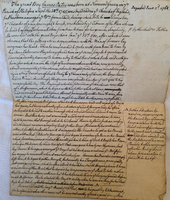 James Oates (1745-1761)
 James Oates, born in Yorkshire in 1745, was raised among the Moravian Brethren and became known from childhood for his honesty, simplicity, obedience, and deep longing to know Christ more fully. After joining the Great Boys’ Choir and later the Moravian congregation, he devoted himself to work, prayer, and spiritual fellowship, especially desiring to live entirely for the “Man of Sorrows.” Though afflicted from a young age with a painful bowel disorder, he endured his illness with remarkable patience, humility, and joy, becoming a source of spiritual comfort and encouragement to those who visited him. During his final weeks, he spoke constantly of his longing to “go home” to his Savior, described visions and feelings of Christ’s nearness, and died peacefully in 1761 at only fifteen years old, surrounded by hymns, blessings, and the Moravian community.
-
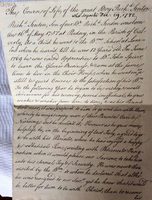 Richard Fenton (1757-1772)
 Richard Fenton, born in Yorkshire in 1757, was raised within the Moravian community and spent his youth at the Brethren’s school before becoming an apprentice glover and resident in the Choir House. Though naturally quiet and well regarded by his companions, he became seriously ill as a teenager and gradually declined in health despite many attempts at recovery. During his illness he remained patient, peaceful, and deeply devoted to Christ, often expressing that he preferred to “be with Christ” rather than recover and continue living in the world. Shortly before his death he described experiencing a powerful sense of the Savior’s forgiveness and acceptance, telling others that Christ would soon take him home. He died peacefully in December 1772 at only fifteen years old, comforted by his faith and the support of the Moravian community.
-
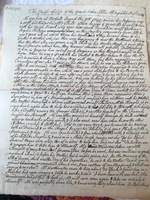 John Ellis (1748-1764)
 John Ellis, born in Yorkshire in 1748, spent part of his childhood living with relatives before returning to his parents, who later became connected with the Moravian Brethren. Though initially considered wild and restless as a child, he underwent a significant spiritual change after joining the Great Boys’ Choir, becoming thoughtful, devoted, and deeply concerned with belonging entirely to Christ. After his father’s death and the onset of a serious illness, he worked beyond his strength to help support his widowed mother and younger siblings while continuing faithfully to attend Moravian meetings whenever possible. Throughout his illness he remained gentle, openhearted, and spiritually focused, expressing certainty that he would soon “go to our Savior.” Shortly before his death in 1764 at age sixteen, he spoke peacefully of seeing Christ and His wounds in a vision and died calmly, asking to be buried among his Brethren at Fulneck.
-
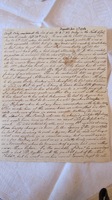 Christian Oxley (1752-1761)
 Christian Oxley, born in 1752 to Moravian parents originally from northern Ireland, entered the Children’s Oeconomy at Fulneck as a very young child and was known for his gentle, childlike nature and fragile health. Though shy in his early years, he gradually became cheerful, openhearted, diligent, and deeply attached to the Moravian community, delighting especially in hymns, Bible verses, and celebrations surrounding Christ’s birth. Despite recurring illness and increasing deafness, he remained faithful in school and eager to participate in meetings and Christmas observances with the other children. After a sudden worsening illness following Christmas 1760, he endured severe suffering with patience and sweetness, surrounded by the prayers and affection of the Brethren. He died peacefully in January 1761 at only eight years old.
-
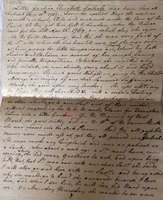 Justina LaTrobe (1767-1772)
 Justina Elizabeth LaTrobe, born at Fulneck in 1767, was remembered as a gentle, loving, and unusually tender-hearted child who was deeply attached to the Moravian community from an early age. After entering the Girls’ Oeconomy as a toddler, she quickly became beloved among both the Sisters and the other children for her cheerful nature, readiness to ask forgiveness, and delight in attending children’s meetings and singing about Christ’s sufferings. When she became seriously ill in 1772, she endured her sickness patiently and spoke sweetly and confidently about going to live with her Savior because she loved Him. During Holy Week, after listening attentively to the story of Christ’s suffering on the Cross, she peacefully accepted that she would soon die. Surrounded by prayer, tears, and a deeply emotional liturgy, she died gently in the early hours of Easter Sabbath at not yet five years old.
-
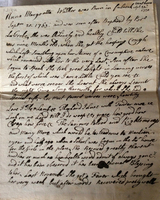 Anna Margretta Walker (1763-1770)
 Anna Margretta Walker, born at Fulneck in 1763, was remembered as a lively, affectionate, and spiritually sensitive child who loved learning hymns and verses about Christ from an early age. Although weakened by illness throughout much of her short life after suffering whooping cough as an infant, she delighted in attending the girls’ school at the Sisters’ House and was deeply moved by Moravian teachings about death, salvation, and union with the Savior. After witnessing the funerals of other Sisters and children, she often spoke peacefully and even joyfully about her own future death, carefully thinking about her burial, favorite scripture texts, and being with Christ. During her final illness in Easter season of 1770, she repeatedly told those around her that she wanted only “our Saviour to come,” remaining calm and spiritually focused despite severe pain and convulsions. She died peacefully at six years old, surrounded by the prayers and blessings of the congregation, and was remembered with great tenderness by her companions and teachers.
-
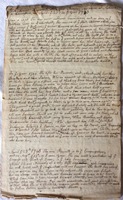 Alice Brown (1730-1757)
 Memoir written for Alice Brown, born in Lancashire in 1730. Alice Brown was a devout member of the Moravian Church. Her memoir details her communal life within various "Economies" and Choir Houses, where she separated from her parents to pursue her faith and enthusiastically shared her works of grace with fellow Sisters. After predicting her own departure, she joyfully embraced her final illness as a journey home, passing away in 1757 at the age of twenty-seven to be united with her eternal Bridegroom.
-
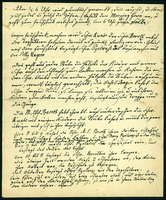 Johann Andreas Hübner’s daily routine for the Bethlehem Boarding School for Girls
 Boarding schools
Rules
Bethlehem Boarding School for Girls
-
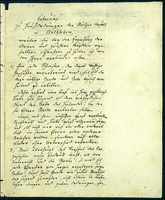 Johann Andreas Hübner’s "House Rules" for the Bethlehem Boarding School for Girls
 Draft of House Rules for the Girls’ School in Bethlehem to which the Sisters who are employed in the training of the Little Girls and Older Girls are to consider themselves bound written by Johann Andreas Hübner, school principal (1785-1790).
-
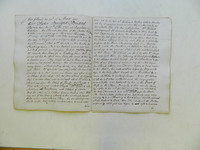 Benigna Briand (1707-1763)
 This manuscript is a short biographical memorial of Sister Benigna Nitschmann, a devoted Moravian woman remembered for her deep faith, humility, kindness, and patience through suffering. It describes her Christian character, her care for others, and the calm, peaceful manner in which she faced a long illness and death in March 1782 at about 61 years old. The account concludes with details of her passing, the grief of her husband and community, and her funeral and burial services, presenting her life as an example of spiritual devotion and perseverance.
-
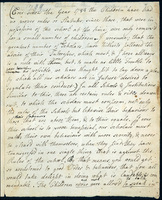 Johann Andreas Hübner’s rules for conduct at the 1789 Bethlehem Boarding School for Girls
 This document outlines a detailed set of rules and expectations for children attending a Moravian boarding school in the late 18th century. It emphasizes obedience, discipline, silence, modesty, religious devotion, and respect toward teachers (“Tutoresses”), peers, and worship practices. The children are instructed on proper behavior throughout the day—from waking, washing, meals, classes, and prayer meetings to recreation and walks outside. The text stresses orderly conduct, avoiding loudness, grumbling, rushing, or rude manners, and encourages the students to develop self-discipline, humility, gratitude, and reverence toward God. Overall, it reflects the highly structured, communal, and religious environment of Moravian education at the time.
Hübner transcription is presented as written, with underlined/crossed out text, original spelling and capitalization. Transcription by Barbara Ballard with annotations by James Talarico
-
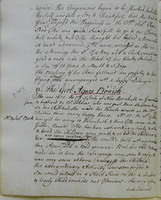 Agnes Böhnisch (1752-1763)
 This manuscript is a short memorial biography of Agnes Böhnisch, a Moravian girl born in Greenland in 1752 who was remembered for her cheerful spirit, kindness, deep faith, and love of worship and singing. She was especially beloved among the children and teachers for her gentle nature and devotion to Jesus. After a long illness that left her weak and bedridden, she remained peaceful and spiritually joyful until her death in May 1764 at only 11 years old, surrounded by the prayers and care of her community.
-
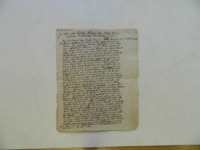 Andrew (Ofodobendo Wooma) (1729-1779)
 This Moravian memoir recounts the life of Andrew the Moor, originally named Ofodobendo Wooma, who was born in Africa and sold into slavery before arriving in New York in 1741. After meeting Moravian Brethren while enslaved in New York, he learned about Christianity, taught himself to read, and developed a deep faith in the Savior. He moved to Bethlehem in 1746, was baptized into the Moravian Church, married, raised a family, and lived a faithful and devoted life within the congregation. In his final illness he longed to be united with Christ, and he died peacefully surrounded by the Moravian community.
-
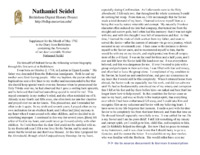 Nathaniel Seidel (1718-1782)
 The memoir is written by Nathaniel Seidel himself up to his arrival in Bethlehem in Pennsylvania. It is continued by another brother or sister who had access to his travel diaries. Seidel recounts his childhood in Germany and the awakening he experienced at the age of 14. He rededicated himself to God at the age of 17, making a pact with his Savior. In 1739, he arrived in Herrnhut and went on to Herrnhag. In 1742, he answered a call to Bethlehem where he became the Elder of the Single Brethren. The rest of his biography recounts his many journeys among the Indians, the different settlements in North America, Europe, South America, and the West Indies. Throughout his life, he kept extensive travel diaries. He was ordained to multiple positions within the Brethren and became Bishop in 1758. The narrative accounts for his last years, his increased weakness, and his death in 1782.
-
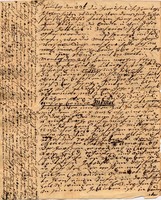 Michael (d. 1758)
 This account of Michael's life was written by another brother or sister. It recounts his upbringing in the Minisink Nation and his youth as a great warrior. The author included details about his "pleasing" facial markings. He was awakened to the Savior in 1742 and baptized. He spent several years in Gnadenhütten and then came to Bethlehem in 1755. The author describes his last illness and his death. He was remembered as a pious and holy member of the Brethren.
-
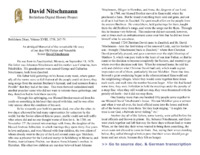 David Nitschmann Sr. (1676-1758)
 This account of David Nitschmann's life was written by another brother or sister. It recounts his childhood in Moravia and how he was raised within the secrecy of the Brethren. In 1704, he moved to Kunewald where he became a farmer. Kunewald experienced a great awakening under his leadership and several of the Brethren were taken prisoners. David himself was declared a heretic and thrown into prison. He escaped from jail and went to Berthelsdorf and then Herrnhut. He received a call to St. Thomas and to St. Croix where his wife died. He then received a call to Pennsylvania along with his daughter Anna. He was one of the builders of Bethlehem. He was a proficient writer and leader of the Widowers' Choir. The author describes in the account his last few days of illness, his death, and his funeral.
-
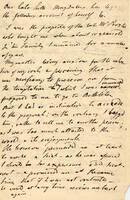 Magdalene (1731-1820)
 Magdalene briefly describes her childhood growing up in slavery. She was persuaded by her master to move to Bethlehem, Pennsylvania. She was reluctant at first but eventually found contentment. She received the Lord as her Savior and was baptized in 1748. The brief account was completed by another brother or sister and describes her marriage, her brief illness, and her death at the age of 89.