David Nitschmann Sr. (1676-1758)
- Name:
- David Nitschmann Sr.
- First name:
- David
- Last name:
- Nitschmann
- Birth date:
- 1676-09-18
- Birth place:
-
Zauchtenthal, Moravia
- Death date:
- 1758
- Death place:
-
Bethlehem, Pennsylvania
- Gender:
- Male
- ML ID:
-
mlper000298
Relations (family):
- Johannes Nitschmann, father
- Catharina Nitschmann (born Friedrickin), mother
- George and Catharina Nitschmann, grandparents
- Anna Nitschmann (born Schneider), wife
- Andreas Schneider, father-in-law
- Melchoir, son
- Rosina Pischin, daughter
- Johanna Nitschmann, daughter
- Anna, daughter
- Anna Johanna, granddaughter
- David Nitschmann, nephew
Memoir:
- Archive: Bethlehem Archives
- Shelfmark: BethDiary Vol. XVIII, p. 267
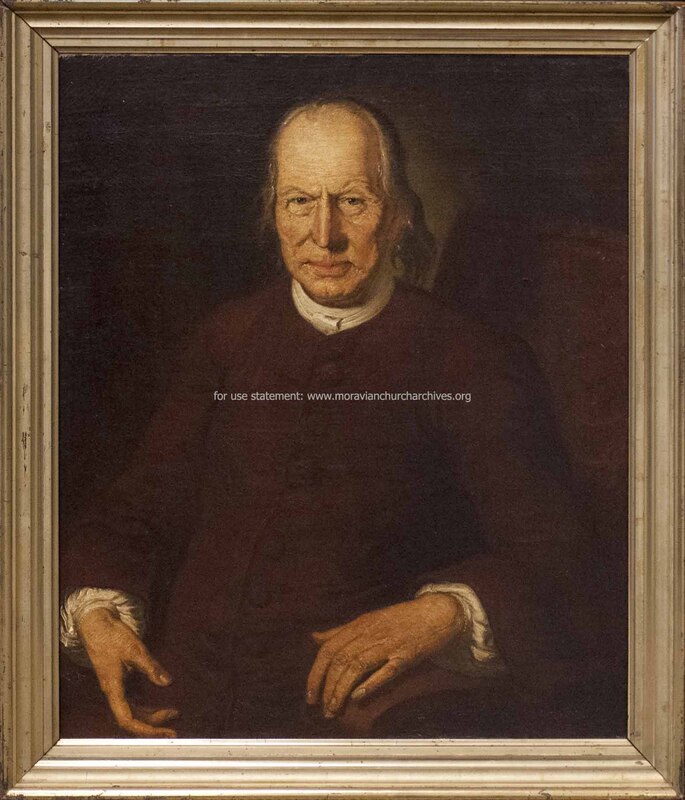
David Nitschmann was born on September 18, 1676, in Zauchtenthal, Moravia, into a family of devout crypto-Protestants who preserved the ancient Brethren's tradition through secret gatherings, and after losing both parents in his sixteenth year he carried that spiritual inheritance forward — moving to Kunewald in 1704 and laboring to revive the old Brethren's faith among his neighbors. The arrival of Christian David around 1724 proved the decisive turning point of his life, igniting a total commitment to the Savior and sparking a regional awakening that drew over a hundred and fifty people to his home for worship, even as authorities responded with fines, confiscation of books, and imprisonment — trials he and his fellow Brethren endured with remarkable steadfastness. He went on to become the first bishop of the renewed Unity of Brethren, a foundational figure in the Moravian missionary movement whose long life of faithful suffering and spiritual leadership left an enduring mark on the Gemeine.
View Transcription of Memoir
An abridged Memorial of the remarkable life story of our dear Old Father and Venerable Senior David Nitschmann
He was born in Zauchtenthal, Moravia, on September 18, 1676. His father was Johannes Nitschmann and his mother was Catharina, born Friedrickin. His grandparents were named George and Catharina Nitschmann, both from Zauchtel.
His father held gatherings in his house every week, where generally all the rooms were so full that not all the people could sit down; they sang songs from the ancient Brethren’s hymnal, and read sermons from a Postille1 that they had at the time. This went forward unhindered until another preacher came who did not want to tolerate these gatherings, and they therefore had to hold them secretly.
Through this upbringing, our Blessed Brother received from his youth on something in his heart that stayed with him, and he was often very uneasy about the condition of his soul.
In his sixteenth year both his parents died, one after the other, in two days; afterward he had many opportunities for seduction by the world, but the Savior allowed him no peace, and he could not well suffer what others did and no one thought worse of him for it. In 1700, on November 15th, he entered into marriage with Anna, the daughter of the blessed Andreas Schneider, in which marriage they spent thirty-five years in love and peace, and were blessed with four children, the two eldest of whom already went to the joy of the Lord several years ago: Melchoir, who was a prisoner for the Lord and martyr in Schildberg in Moravia; and Rosina, married name Pischin, our dearest Anna Johanna’s mother, in Herrnhut. His other two children are our dear beloved heart Johanna Nitschmann, Pfleger in Herrnhut, and Anna, the Jüngerin of our Lord.
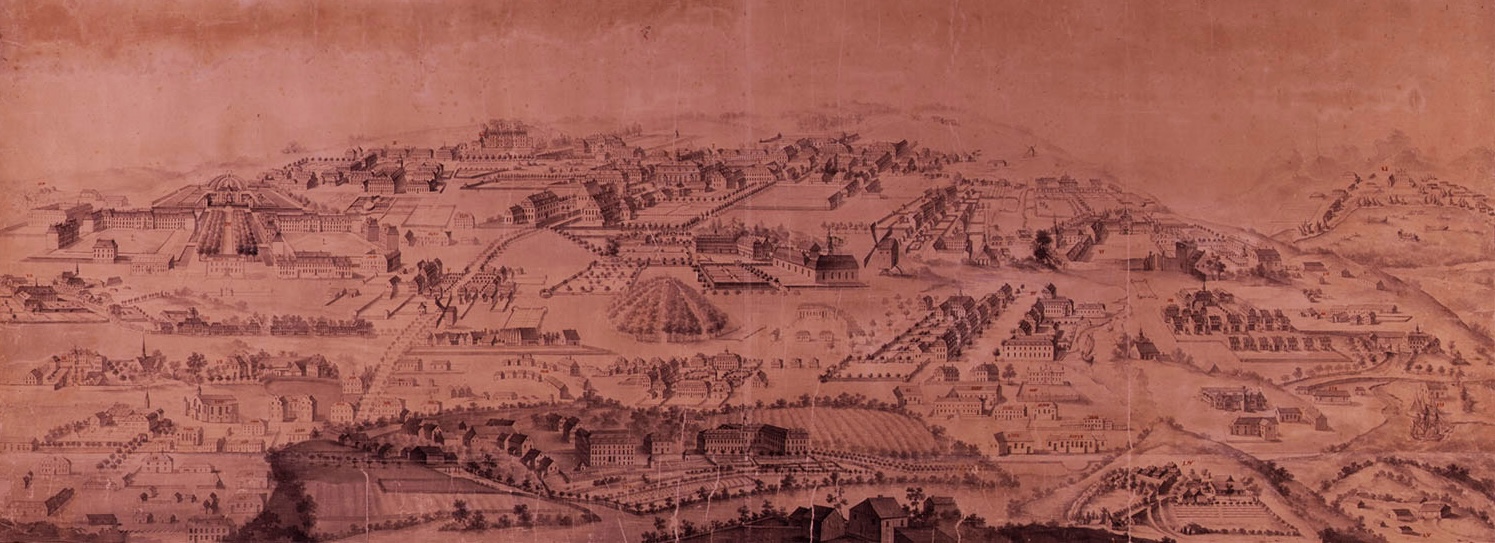
In 1704, our blessed Brother moved to Kunewald, where he purchased a farm. But he found everything there cold and grim, and not at all as it had been in Zauchtel. He spent much effort on the people from the ancient Brethren. He visited them, held gatherings for them, taught them the old Brethren’s songs, and wrote the songs out for them. Through this he became very beloved. This endeavor did not succeed, however, and at times such an embarrassment came over him that he did not know himself what he was about.
Around 1724 Christian David came to Zauchtel, and Br. David Nitschmann—later the first bishop of the renewed Unity, and his brother’s son—brought [Nitschmann] back to Zauchtel, 2 where then Christian David powerfully prayed, and gave a sermon over the eight blessings of Matthew 5, which was pure truth to the heart of our dear Father, so that he came to the decision to become completely the Saviors, and wanted to go where ever that decision took him. When he returned home, he told his wife and children what Christian David had said, which made a great impression on all of them, particularly his son Melchior. From that time forward a great awakening began in the aforementioned Kunewald and the neighboring villages, where they would come together three times each week, and each time the number became larger. After this had lasted some time, they were forbidden to hold the meetings under the penalty of a steep fine; when they still would not stop, they were threatened with the penalty of death—but it did not stop them.
One Sunday more than one hundred fifty people came together in our Blessed David Nitschmann’s house. His son Melchior gave a sermon and when it was all over, the local official came into the house and took all of the books away from them. Yet they kept singing, “A mighty fortress is our God, a bulwark never failing,” etc.3
Another day all of the fathers, some twenty, were alled before the local officials and thrown in prison. He, Schuster Nitschmann, and Quito were stuck together and left that way for three days without food or water. When, on the third day their wives wanted to bring them something, the wives were not allowed to come to them. But, seeing their wives standing below, they called through a broken pane that their wives should just go home and not return, because they felt no hunger.